.svg)


16 Important HR Trends 2025
.jpg)

- 60% of respondents to a Sapio Research survey on behalf of Asana said they had experienced burnout symptoms at least once in the previous year
- A Randstad-Civey survey shows that 41% of German employees demand active health protection from their employers
- 16 trends range from AI-powered recruiting to diversity in leadership positions to people analytics in the HR department
The Covid pandemic significantly affected nearly every industry, from leadership all the way down to employees and the self-employed. Some sense of "normality" has returned by now, but new HR trends have emerged as a direct result of the pandemic. With artificial intelligence, there's another factor set to play an increasingly important role in recruiting. Trends from previous years haven't lost relevance, while new ones need to be considered too. Here's an overview of the most important HR trends for 2025:
1. Recruiting evolution through artificial intelligence
The use of artificial intelligence will play a significantly larger role in recruiting too. AI allows requirements and candidate data to be matched against a much wider range of criteria. Open positions can be filled with suitable candidates both internally and externally. Beyond the recruiting process itself, another goal is to familiarize employees with the new technology and involve them more in their own work.
2. Blended workforce
The combination of different employment arrangements within a company will become even more established in 2025. Hybrid work, fully remote work, or on-site work with models like desk sharing will all be needed, especially in the competition for young talent, to stay ready for the labor market. This demands a high degree of flexibility from companies in order to competently fill open positions going forward.
3. Employee wellbeing
Burnout has been more of a concern than ever since the start of the pandemic. In a survey from October 2020 by Sapio Research on behalf of Asana on the Anatomy of Work, 60% of respondents said they had experienced burnout symptoms at least once in the previous year. The main reasons cited were overload, as well as difficulty switching off after work. In the age of home office, the line between work time and personal life has blurred more than ever before. Pandemic-related lack of opportunities for balance and distance have made things worse.
This has consequences for work performance, and ultimately for company success. After nearly two years of the pandemic, and amid uncertainty about how much longer the increased strain will last, employees' mental and physical health has become a more important topic than before. Company productivity depends heavily on how well teams function, how supported employees feel, and what steps are taken to improve "employee wellbeing."
And that's not all: employees expect a certain level of engagement from their managers and companies. According to a Randstad-Civey survey, 41% of German employees surveyed demanded health protection from their employers. What matters here: individual solutions that address each person's specific needs. Business yoga, for example, isn't a welcome offer for everyone, and wellness might mean something different to different people. For others, it might be more about support organizing childcare, or healthy meals at the office or at home.
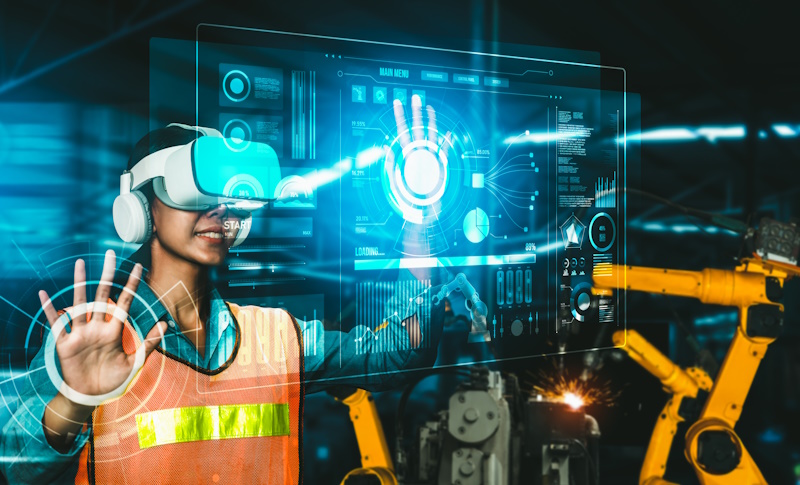
4. Virtual reality (VR) in the application and onboarding process
The search for talent is becoming ever more diverse. Companies can use virtual reality (VR) in the application and onboarding process. This brings several advantages at once, since it increases efficiency, expands the talent pool, and can even help win over external experts who may work permanently abroad. Future employees can familiarize themselves with the company, its philosophy, and its work processes through virtual reality. VR also offers further approaches for use in sales and internal training.
5. Empathy as a leadership style
The distant leadership style, with bosses acting as impersonal figures uninvolved with their teams, is increasingly a thing of the past. With an eye on employees' mental health, managers in particular are being asked to show interest and empathy and to create opportunities for connection. Flexibility and opportunities for exchange and balance are among the most important health care strategies within companies.
One-size-fits-all solutions are less in demand here too, compared to tailored offers that specifically address individual situations and needs. A single employee has different needs than, say, a single father raising his child or the mother of a family of five. Managers are called upon to relieve pressure and offer support, ideally at the very first signs of burnout or overload.
Employees shouldn't feel left alone with their worries and workload. The problem of isolation hit many employees hard during lockdowns, and employers can do a lot to improve mental health here. Even with physical distancing, closeness can be created and team spirit fostered, for example through regular exchange in small groups, one-on-ones with managers, and team building activities.
6. New leadership skills
With the new challenges of yet another year shaped by the pandemic, and the mental and physical strain on many employees, the demands on the leadership skills of managers and team leads are rising too. While it used to be mostly about management, leading a team, distributing tasks, and keeping an overview, so-called "soft skills" are becoming increasingly important. For many employees, managers are important points of contact, not just for technical and organizational questions, but also needing an open ear for fears, worries, and problems.
This is a demand many managers aren't well prepared for. Training and support for team leads in these new tasks, provided by senior leadership, helps ensure that "mental load" is recognized and prevents not just employees but also managers from burning out and dropping out.
7. Diversity in leadership positions
Diversity isn't a new topic, but since 2020 it has become part of mainstream and general awareness. What used to only appear on the agenda of particularly committed and critical companies and individuals is now an important value for many companies. What do teams, and especially leadership levels, actually look like? Is diversity only implemented at lower hierarchy levels, with all leadership positions held by white, heterosexual, cisgender men? How many women are in leadership? How diverse is the team? Is diversity considered in hiring decisions? How does the company treat employees from marginalized groups? How is it ensured that they're protected from discrimination?

By 2025 at the latest, diversity is an HR topic every responsible company should address. And not just out of fear of bad press, but out of genuine interest and rooted in the company's own values. Clear values, backed by matching action, also make companies more interesting and attractive to many potential applicants.
8. Value-driven business
The more sociopolitical topics like racism and other forms of discrimination, sustainability, and climate protection move into public focus, the more scrutiny falls not only on public figures but also on corporate policy. Companies that stand for clear values in 2025 and communicate them openly are more attractive to employees for several reasons: shared values connect people, and identifying with a company and its business values motivates employees. In the best case, this creates a feeling of fighting for a shared cause.
Customers make decisions based on values too. In the age of social media, news about misconduct spreads quickly and can significantly affect revenue. Companies therefore need to think carefully about their values and how they're put into practice. And they need to share these values with employees, communicate progress and new developments, and involve staff in that communication.
This doesn't have to be a partisan political stance, it's mainly about the question: what kind of world do I want to live in? And: how can I contribute to that? Both as a company and as an employee.
9. People management and distance leadership
An authoritarian leadership style is no longer fitting, especially in the age of home office and remote work. Full control simply can't be enforced, nor does it particularly motivate employees. Instead, trust is needed, an empathetic guidance of the team, but also a degree of personal responsibility. No micromanagement, but rather trust in each individual's abilities and integrity.
Managing remote teams was a challenge many managers had to face for the first time in 2020, 2021 was a period of learning and adjusting that certainly isn't finished in many companies even in 2025, and will continue. The optimal amount of exchange and support on one side, but also autonomy and freedom of decision for employees on the other. The right tools, such as time-tracking software and project management systems, help implement these points effectively.
10. Authenticity & transparency
Empathy is only one side of the coin, the other is honesty and transparency toward employees. Especially in remote teams, an atmosphere of trust and authenticity needs to be created to prevent problems from being recognized too late, projects failing, or employees quitting because they didn't feel able to voice their issues honestly. Managers can lead by example here, by showing authenticity and sharing their own challenges with the team.
11. Employee benefits
It's not the most important factor, but employee benefits can play a significant role in team motivation and a sense of appreciation. That can be small things like a stress ball for home office, a care package with a delicious lunch, or a wellness voucher. In the office it's easier to provide a fruit basket and drinks, or order pizza for the team, but similar benefits can be implemented for home office too. Regular lunches delivered to everyone's home (similar to a canteen). A healthy snack box. Get inspired by the care packages and virtual events in the heycater! Marketplace!
12. New technologies & digital transformation
The more new technologies emerge, the more efficiently work can be done, and the better hybrid and remote work models can replicate everyday office life. That's the theory. In practice, many companies use too many apps and systems, so employees spend more time switching between applications or are even confused about which content is communicated in which application. The result is extra work, at least when it's not clearly defined which application and technology should be used for which purpose.
13. Agile thinking
The modern working world is flexible, conditions change faster than ever, not just because of the pandemic but also because of new regulations, and companies must always be ready to respond. Rigid structures and plans made months or even years in advance, with no room to deviate, are something hardly any successful company can afford today. Only those who stay agile and respond to change can stay "on top of the game" in their industry. Otherwise, competitors who can decide and act more flexibly will overtake them.
14. Cross-regional recruiting
Remote work is now well established, and many companies have learned that employees don't need to be physically present in the office to work productively. One consequence is that good employees no longer necessarily need to come from the region or be willing to relocate. This expands the talent search for companies, at least for jobs and industries where remote work functions well. That's an opportunity for both sides, especially in industries where workers are scarce.
15. E-learning as a training concept
An important part of employee retention is a company's approach to training. Continuous learning within a company is becoming increasingly important for employees, and this needs to be considered in HR for 2025. E-learning proves to be a great fit here, since employees can determine their own learning times, locations, and content. Ultimately, every company benefits from the ongoing development of its employees.
16. People analytics in HR
Optimizing and analyzing your own processes is a necessary step to keep up with competitors amid ongoing digitalization. The data available to an HR department is becoming more extensive and complex. People analytics aims to improve employee productivity within the company based on the data collected.
Team building and employee benefits with heycater!
Motivation, mental health, and empathetic leadership are important HR trends for 2025. What can you concretely do to support employees and make their workday nicer and easier?
Even though small things don't solve big problems, they do contribute to employees feeling more seen and appreciated. A small care package for home office is an inexpensive gesture that can make a real difference. The same goes for a team building evening that's not about work, but about a shared experience. At heycater!, you'll find a wide selection of virtual events and packages for remote teams and home office. Take a look at our packages and events in the Marketplace and find the right fit for your team!
Did you take away any new insights from this article? Are there points you'll bring back to your team or company? Feel free to share this article with your teammates or managers, for example to spark a new conversation!
Request Catering Now
Suggested Articles




.jpg)
.jpg)


.jpg)

.png)





.jpg)






.png)




.jpg)





.png)




.jpg)
.jpg)






.jpg)


.jpg)
.jpg)
.jpg)
.jpg)

.jpg)
.jpg)

.jpg)

.jpg)

.jpg)





.jpg)

.jpg)
Ready for stress-free business catering?
.png)
.png)
.png)