


Food Truck Hire: How to Plan Street Food Catering for Your Company Event
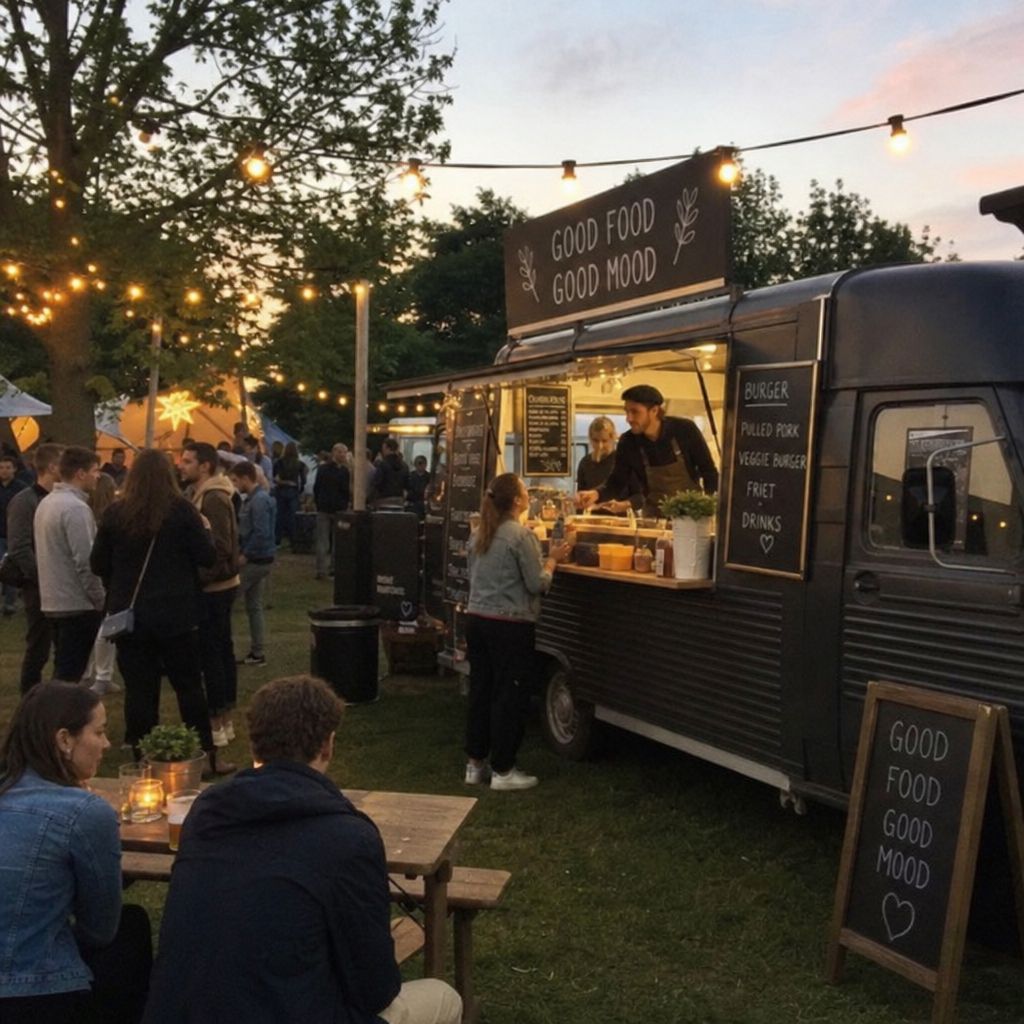

- Why food trucks work so well for company parties, summer events and trade fairs
- Checklist with 8 selection criteria and 7 questions to ask the provider
- Tips to avoid long queues and keep service running smoothly
- What to look out for in costs and quotes
Hiring a food truck is an easy way to bring great food, atmosphere and experience together in one place. Whether it is a company party, summer event, open day, trade fair or team event: with the right food truck, your guests get more than something tasty, they get a moment they will remember. Here you will learn what matters and how to organise street food catering without unnecessary stress.
Why should you hire a food truck?
A food truck pays off when you want catering that is flexible, visible and sociable. Instead of a classic buffet, your guests get freshly prepared dishes from a mobile kitchen, usually in a relaxed, open atmosphere. That makes food truck catering especially attractive for events where connection, simplicity and impact matter.
The big advantage lies in the combination of service and experience. The truck automatically becomes a meeting point at your venue, and guests know straight away where the food is. At the same time, you do not always need a full kitchen, extensive set-up or a formal seating plan. At outdoor venues, company grounds and festivals in particular, that saves a lot of organisation.
A food truck also suits very different styles: burgers, tacos, pizza, barbecue, Asian bowls, crêpes, ice cream, coffee or vegan street food. You can keep it simple with quick snacks or combine several trucks into a varied dinner concept.
The strength of street food catering
Street food catering stands for fresh, familiar and direct food. Dishes are usually prepared to order, so your guests see, smell and experience what is happening. That creates far more energy than catering that happens entirely behind the scenes.
For organisers, street food catering is attractive because it scales well. For a small get-together, one truck with a compact menu is often enough. For larger events, you combine several kitchens, which keeps waiting times short and choice wide. Dietary requirements can usually be accommodated well if you communicate them clearly in advance.
Another plus is the relaxed dynamic: guests come by the truck on their own, start chatting in the queue and choose what they like. The food truck becomes not just a food counter, but a mood-maker for your event.
Suitable for many business occasions
A food truck fits more situations than many people think. At a company party or summer event, you can serve colleagues quickly and easily. At open days, sports events or client events, the truck creates recognition and a practical flow. And as a late-night snack at the end of an annual celebration, it brings fresh energy one more time.
Then there is the convenience: you have less to organise yourself, less to clean up and often fewer individual suppliers to coordinate. That leaves more attention for your guests while the food is delivered professionally.
Which food truck suits your event?
The best food truck is not automatically the prettiest or most eye-catching, but the one that suits your guests, your venue, your schedule and the atmosphere you want. So do not start with the menu alone, but with the goal of your event: do you want to serve many people quickly, offer a culinary experience or mainly add a sociable element to the get-together?
For a short event, speed counts. Choose dishes that can be served quickly and need few steps per portion. Longer celebrations leave more room for live preparation, several courses or a mix of savoury and sweet. At business events, presentation also plays a role: a well-kept appearance, clear communication and punctual service are especially important here.
Also consider the mix of your guests. A menu with only meat dishes becomes difficult if many people eat vegetarian. A very specialised cuisine can be great, but works less well if you want to cater for a broad group. A compact menu with a few strong options is often better than too large a selection.
Practical selection criteria
Use this checklist to choose more effectively:
- Guest count: ask whether the truck can handle your group size in the time available.
- Type of service: individual sales, flat-rate catering, buffet style or continuous service.
- Menu variety: options for vegetarian, vegan, halal, gluten-free and allergens.
- Preparation time: how long does it take until guests receive their dish?
- Space required: does the truck fit the venue and is there enough room for guest flow?
- Infrastructure: power, water, lighting, waste disposal and possibly permits.
- Look: does the truck match the style of your event visually?
- Communication: does the provider respond clearly, quickly and professionally?
These points may seem practical, but they largely determine how smoothly your event runs. A good food truck provider thinks along with you and tells you clearly in advance what is and is not possible.
Get free quotes for your food truck now!
Food truck catering: what to clarify in advance
Successful food truck catering depends on good coordination before the event day. So do not only talk about the food, but also about the schedule: when does the truck arrive? How long does set-up take? When does service start? And what happens if it gets busier than expected?
Start with the guest count and the desired meal times. A lunch needs something different from an evening event with several rounds. Also clarify whether everyone eats at the same time or guests come by at different times. That affects staffing, portion size and waiting time.
Then look at the venue. A food truck needs enough space to stand safely, serve guests and manoeuvre if necessary. Check whether the ground is suitable and whether the vehicle has access. Also think about noise, smoke, smells and neighbours, especially in the city.
Important questions to ask the provider
Ask concrete questions in advance so there are no surprises later:
- What is included in the price? Staff, crockery, travel, set-up and clearing away.
- What infrastructure is needed? Ask specifically about power supply, water and cover.
- How are allergens communicated? This matters for safety and hospitality.
- What is the maximum capacity per hour? This helps you avoid long queues.
- What happens in bad weather? A plan B is valuable, especially for outdoor events.
- How is waste handled? Clarify who takes care of bins, bags and cleaning up.
- Are permits required? That depends on the venue, the city and the type of event.
Asking these questions early makes the conversation concrete right away. And you will quickly notice whether a provider has experience with your type of event.
Popular food truck concepts for company events
Dishes that are quick, fresh and easy to eat by hand are particularly popular. Burgers and fries remain classics, but tacos, bao buns, pizza, poké bowls, loaded nachos and handmade sandwiches also go down well. For a sweet moment, ice cream trucks, churros or crêpes are ideal. At business events, a coffee or breakfast truck can also be a strong choice.
The concept does not have to be big. Often a single dish is enough, as long as it suits the moment: a coffee truck at a morning opening, a pizza truck at a casual networking evening or a snack truck to round off the annual celebration.
How to avoid queues and disappointment
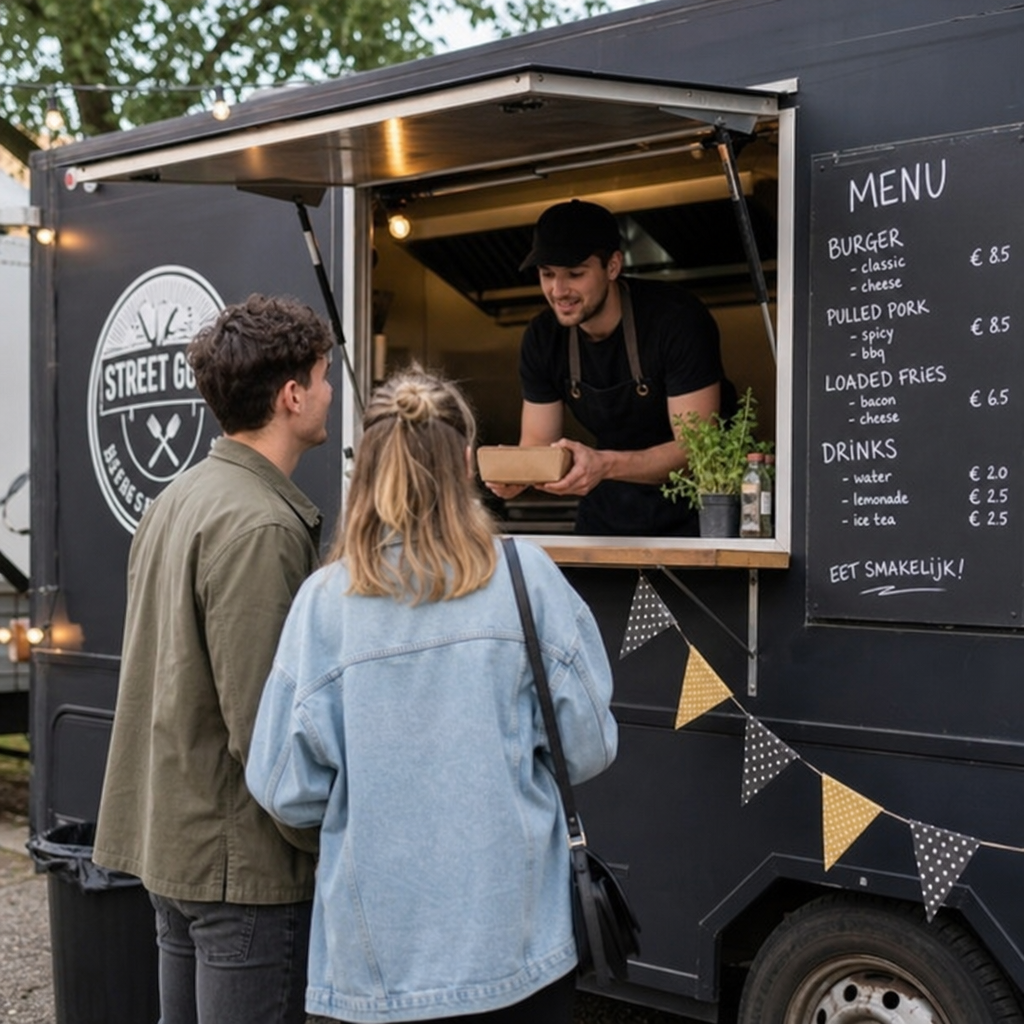
A food truck is visible, and that is exactly why queues are noticed immediately. With realistic planning, most problems can be avoided. The most important question: how many dishes per hour can the truck prepare without losing quality?
For large groups, work with time slots or several serving points. Guests can start by department, table or group, for example. At open events, a short, clear menu helps: the less hesitation when ordering, the faster things move.
Communication also makes a difference. Display the menu clearly, label dietary options and make it clear whether guests pay or everything is included in the catering. When guests know what to expect beforehand, there is less delay at the truck.
Smart choices for smooth service
- Choose just a few main dishes instead of a long menu.
- Agree on toppings and sauces sensibly in advance.
- Ensure sufficient lighting for evening service.
- Position the truck so the queue does not block walkways.
- Clarify whether extra staff are needed for serving or payment.
- Place bins nearby, but not directly next to the eating area.
These details seem small, but they shape your guests' experience. A delicious meal feels less successful when everyone waits a long time or does not know where to queue.
Costs and value without surprises
The cost of a food truck depends on the provider, menu, group size, venue, duration and type of service. Because these factors vary widely, compare quotes by content and not just by total price. The cheapest option is not always the best if important services are charged separately later.
Check exactly what is included. Some providers work with a price per person, others with a minimum spend, a call-out fee or a package price. Also ask about travel costs, staff hours, crockery, waste disposal and possible surcharges for long standing times or late finishes.
The value does not lie in the food alone. You are also paying for preparation, equipment, transport, hygiene, presentation and experience. A professional provider helps you estimate the right quantity so you order neither too little nor far too much.
The right preparation for the event day
On the event day, you want to improvise as little as possible. So appoint a dedicated contact person who receives the food truck and can answer practical questions. This person knows where the truck may park, where power and water are and what the schedule looks like.
Check the access route and parking spot in advance. A food truck is usually larger than a normal car and needs space to manoeuvre safely. If the venue is hard to reach, share directions with the provider in good time.
Also think about your guests' comfort. In rain, wind or strong sun, a canopy, a tent or a clearly marked waiting area makes a big difference. At evening events, lighting and signage are important. The easier it is for guests to find and use the truck, the more it contributes to the atmosphere.
Conclusion: food, atmosphere and convenience in one decision
Hiring a food truck is a strong choice if you are looking for catering that is both practical and atmospheric. With the right preparation, you combine fresh food, clear service and a relaxed atmosphere for your guests. Whether it is street food at a summer event, food truck catering for a company party or a coffee truck at a client event: success lies in the interplay of menu, venue and planning.
Take the time to define your requirements clearly, ask concrete questions and choose a provider who thinks along with you. Then the food truck becomes not just a place where guests pick up their food, but a lively part of your event.
Plan your event

Ready for stress-free business catering?