.svg)



Sustainable Catering with heycater!: Challenges, Ideas & Concepts
.jpeg)

- Defines sustainable catering through heycater's 4 pillars of sustainability
- Addresses challenges and issues in catering as an honest starting point before discussing solutions
- Closes with concrete concepts and ideas for practically implementing sustainable catering
Sustainability and climate neutrality are becoming increasingly important in catering too. Along the way, various challenges need to be mastered, all while staying aligned with hygiene regulations and legal requirements. heycater! is taking an innovative approach here and has developed its own "4 pillars of sustainability," an important part of our company philosophy. The following article explains in detail what's behind this and what forward-thinking ideas for sustainable catering exist in the market.
1. Challenges and issues in catering
Much like the takeaway concept at restaurants, catering doesn't have the best reputation as a sustainable industry. The main reasons cited are food waste and the use of individually packaged portions, often necessary for hygiene reasons, which then end up in household trash.
Food carries a significant ecological footprint. The burden of greenhouse gases and the wasteful use of valuable resources like farmland and drinking water through discarded food play a central role in catering too. Here's a summary of the challenges facing sustainable catering.
- Oversupply of food: according to a survey by the Leading Event Caterer Association, more than 18 percent of the food offered at a buffet sometimes goes uneaten.
- Keeping reserves on hand: caterers keep 10 to 12 percent of dishes in reserve at events, to quickly and easily fill any potential gaps. In the worst case, up to 30 percent of food ends up being discarded as "leftovers" and reserves.
- Food waste at trade shows & conferences: according to a study by the University of Stuttgart with the Society for Packaging Market Research, an estimated 250 kg of food waste is produced per 1,000 attendees.
- Vegetarian & vegan options often not offered as an alternative: animal products and foods emit significantly more CO2 than vegetables and fruit. Vegetarian and vegan dishes spark selective interest, but still aren't offered as a full-fledged alternative by many caterers.
- Packaging waste: hygiene regulations in Germany are strict and often require individual packaging for dishes, ingredients, and other components in catering. Without the use of plastic-free and reusable packaging, this generates a huge amount of single-use waste, contributing to the current environmental burden.
- Transport: transport routes can have a negative impact on resource consumption, since both the trip itself and keeping food fresh require valuable energy. A curated selection of local caterers can help address this.
2. What is sustainable catering?

Sustainability in catering covers several important aspects. Avoiding resource waste, reducing trash, optimizing transport routes, and lowering CO2 emissions are core points of sustainable catering. For caterers and heycater!, offering more climate- and environment-friendly catering is part of the future.
Customers with a strong awareness of sustainable catering make a valuable contribution to climate protection. Resources can be saved here without sacrificing flavor.
3. Sustainable catering with heycater! - 4 pillars of sustainability
Sustainable and climate-neutral catering is very important to heycater!. As part of the "Leaders for Climate Action" initiative, we're committed to sustainability in the industry, and specifically in catering. Leaders for Climate Action is a nonprofit organization that supports executives in transforming their companies toward sustainability.
We've developed our own "4 pillars of sustainability" for exactly this purpose, encompassing specific behaviors and criteria that are regularly reviewed as part of our work with our partners:
- Reducing single-use waste: thanks to our partnership with Vytal, a company that develops reusable food packaging, we support the use of reusable packaging. This commitment significantly reduces single-use waste and, in turn, environmental impact.
- Reducing food waste: thanks to our experience in catering, we're able to plan events and catering very efficiently. With information on headcount and desired dishes, our calculations make an important contribution to reducing food waste.
- Promoting vegan and vegetarian options: at heycater!, vegetarian and vegan catering options are an important part of our offering. With the goal of reducing the consumption of animal products, and thereby lowering water use, greenhouse gas emissions, and land use, we place great value on vegan and vegetarian dishes. heycater! specifically looks for caterers focused on meat-free meals and gives our partners guidance on how to improve their vegetarian and vegan offerings. This also lets our customers quickly and easily find suitable options in any city.
- Reducing greenhouse gases: heycater! has its CO2 emissions measured annually (calculated according to the Greenhouse Gas Protocol) and offsets them through Gold Standard-certified projects. Among other things, by distributing emission-optimized cookstoves in Nigeria and supporting community solar power plants in India, we're contributing to a livable environment.
We review the caterers in our portfolio on which measures they've already implemented, and they receive a corresponding sustainability certification. We also support them in using reusable packaging and implementing our sustainability concepts.
4. Concepts & ideas for sustainable catering

Catering can be made highly sustainable in various ways. On the path to greater climate-friendliness, interesting, forward-looking concepts and ideas can be pursued that conserve natural resources.
- Calculating & planning your catering: every event and every regular catering job starts with planning and calculation. As proven experts, we can support you effectively at this very step. Based on the number of participants or employees and the number of dishes, we're able to plan efficiently, reducing both food waste and costs.
- Sustainable events & open communication: sustainability at an event doesn't have to mean doing without. It's really about the conscious, intelligent use of resources. Catering is an important, fundamental part of that. Open communication with employees and attendees supports sustainable awareness, when you deliberately focus on dish selection, ingredients, regionality, and packaging. In the long run, this can pay off, since you'll be seen as an "early adopter" for taking a forward-thinking approach.
- Choosing regional and seasonal ingredients: whether for your upcoming holiday party, summer party, or ongoing employee catering, individual planning can also factor in regional and seasonal ingredients, requiring shorter transport routes and taking environmental aspects into account. We can effectively support your search for regional caterers and providers, reducing your CO2 footprint.
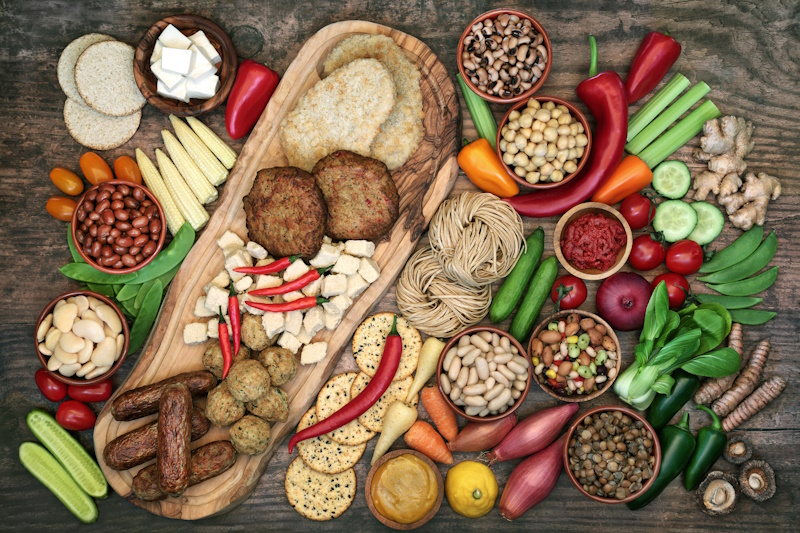
- Vegan & vegetarian dishes as an asset: plant-based foods, and offerings based entirely on vegan or vegetarian ingredients, are no longer a niche product. Rather, conscious, environmentally minded eating has become central. Vegetables and fruit emit significantly less CO2 than animal products and can be prepared to be extremely delicious with creative ideas. Menus or dish selections don't have to be entirely plant-based, but plant-based options should definitely have a place. If more meat or fish is served, sustainable fishing or organic meat make a valuable contribution to sustainable catering.
- Significantly reducing food waste: as already mentioned under "calculation," efficient planning helps a great deal here. With heycater! and our partners, even short-notice changes to headcount, menu sequence, and dish selection or combination can be handled without a hitch. This significantly reduces wasteful handling of food.
- Environmentally friendly preparation: there are environmentally relevant aspects to how food is prepared too. Using water-saving, energy-efficient appliances, climate-friendly electricity, and eco-friendly cleaning products are smaller levers that, together, still have a positive impact on sustainable catering.
- Transport: CO2 emissions play a central role in transport, with longer transport routes significantly increasing the carbon footprint. But it's not just the distance that affects sustainability, keeping food cold or warm, and the choice of vehicle, matter too. Caterers located nearby can help here. With heycater!, you can quickly find suitable offers near you and receive a sustainable proposal in no time.
5. Planning & implementing sustainable catering with heycater!
The industry as a whole needs to rethink its approach, and heycater! wants to lead the way on sustainability. In the catering industry, we're seeing more and more providers looking for solutions, and we support innovative solutions for the long term.
Sustainable catering isn't a loose promise at heycater!, it's central to who we are. Feel free to reach out to us if you'd like more details or need support in this area. We're happy to share our knowledge and experience to help make your next catering job sustainable.
Request Catering Now




Ready for stress-free business catering?
.png)
.png)
.png)